What is the difference between Liquid Nails and regular caulk?
When selecting materials for construction, renovation, and repair projects, many people confuse liquid nails products with regular caulk because both are applied in a similar way and are available in cartridge packaging. However, they serve different purposes. Caulk is mainly designed for sealing gaps, preventing water infiltration, and improving surface protection, while liquid nails products are engineered primarily for bonding and structural attachment. Understanding these differences helps installers choose the right material for each application.
A liquid nail sealant combines adhesive performance with sealing capabilities, allowing it to provide strong bonding while maintaining flexibility after curing. Unlike ordinary caulk, which mainly fills joints and cracks, construction adhesive products are designed to hold materials together. Modern adhesive sealants can bond wood, tile, metal, plastic, and other common substrates, making them suitable for a wide range of indoor and outdoor projects.
Shanghai XMC New Material Technology Co., Ltd. has developed extensive experience in adhesive and sealant manufacturing. With integrated production capabilities and strict quality control systems, the company provides stable sealing and bonding materials for construction and industrial applications worldwide. Its product portfolio includes silicone sealants, polyurethane sealants, MS sealants, expanding foam sealants, and adhesive products that support different project requirements.
Understanding the Basic Difference Between Construction Adhesives and Caulk
The primary difference between liquid nails and regular caulk lies in their intended function. Regular caulk is mainly used as a protective barrier. It seals joints around windows, doors, bathrooms, and building surfaces to prevent moisture, dust, and air leakage. Its flexibility allows it to accommodate minor movement between connected surfaces.
In contrast, construction adhesive liquid nails is formulated to create a strong connection between two surfaces. It distributes bonding force across the contact area and reduces the need for mechanical fasteners in many applications. This makes it valuable in projects where a clean appearance, fast installation, and durable attachment are required.
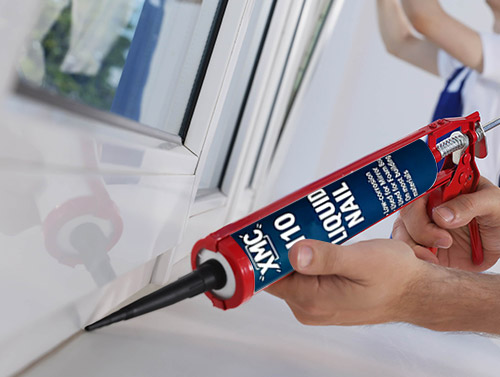
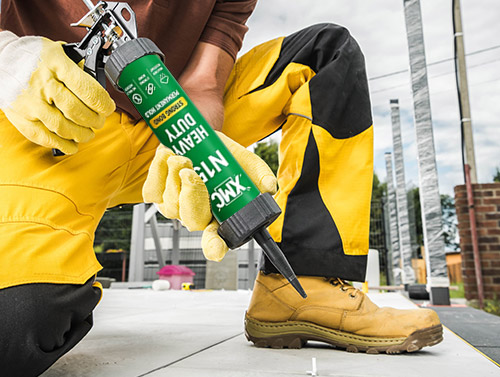
The difference can also be seen in application methods and performance expectations. Caulk is normally applied along edges and joints, while adhesive sealants are spread between surfaces that need to be joined. Although some advanced products can perform both functions, choosing a material according to its main purpose ensures better long-term performance.
| Product Category |
Primary Function |
Typical Applications |
Main Advantage |
| Regular Caulk |
Gap sealing and protection |
Windows, bathrooms, expansion joints |
Flexible sealing performance |
| Construction Adhesive |
Material bonding |
Panels, flooring, decorative materials |
Strong substrate attachment |
| Adhesive Sealant |
Bonding and sealing combined |
Indoor and outdoor construction |
Dual-function performance |
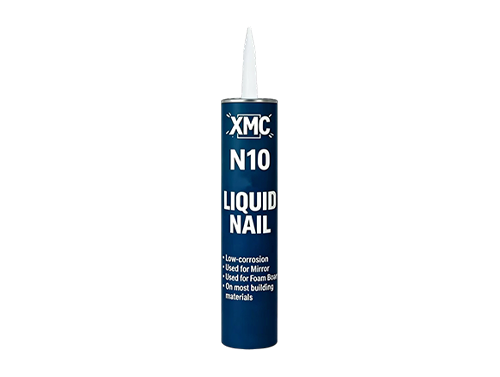
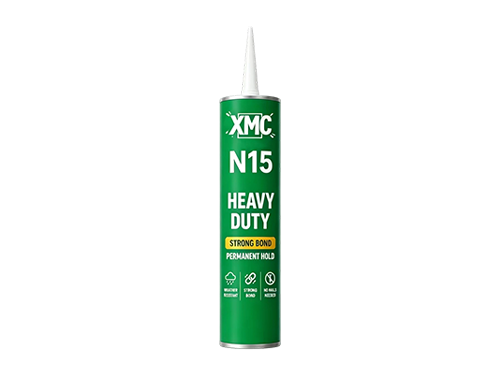
High Strength Bonding Series: Construction Adhesive Liquid Nails
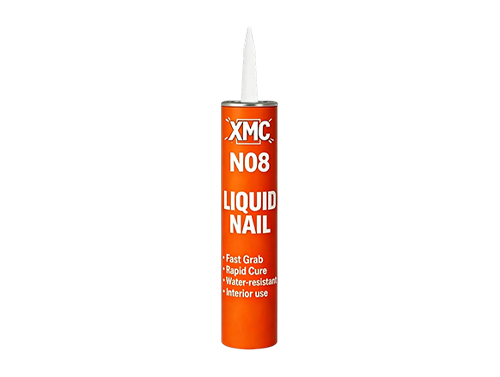
The high strength bonding series focuses on replacing or reducing traditional mechanical fixing methods. These products are designed for applications where materials must remain securely connected under regular environmental stress. A liquid nails construction adhesive provides strong initial grab and reliable long-term adhesion on multiple substrates, including wood, ceramic materials, metal surfaces, and plastic components.
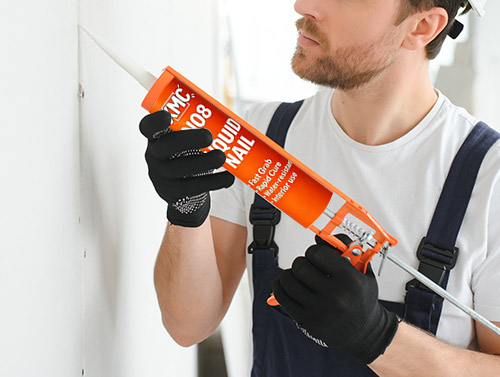
This product category is widely used in interior decoration, furniture assembly, wall panel installation, flooring projects, and building maintenance. Its ability to bond different materials allows contractors to complete installations with fewer visible fasteners, improving the overall appearance of finished surfaces. Compared with ordinary caulk, this category focuses more on mechanical attachment rather than only sealing performance.
The technical advantages of this series include compatibility with various substrates, convenient cartridge application, and stable performance in different environments. Depending on project requirements, formulations may include indoor versions, outdoor weather-resistant versions, and clear versions. These variations allow users to select suitable products according to installation conditions.
- Suitable for bonding wood panels, tiles, metals, and plastic materials.
- Helps reduce dependence on screws, nails, and other mechanical fasteners.
- Provides clean installation results with less surface damage.
- Supports different construction environments through customized formulations.
Shanghai XMC New Material Technology Co., Ltd. supports this product category through modern manufacturing facilities and customization services. The company works with distributors and industrial partners to provide consistent quality adhesive materials for different markets. Its production system ensures stable supply and supports OEM cooperation requirements.
Flexible Adhesive Sealant Series: liquid nail sealant for Multi-Purpose Applications
The adhesive sealant series combines bonding strength with sealing flexibility. A liquid nail sealant is designed for projects where both attachment and gap protection are important. It can create a durable connection while helping prevent moisture penetration, making it different from traditional adhesives that only focus on bonding.
This category is commonly applied in construction joints, decorative installations, repair projects, and areas where materials may experience slight movement. The flexibility of adhesive sealants allows connected surfaces to maintain performance when exposed to vibration, temperature changes, or building movement. This makes them suitable for both residential and commercial applications.
Compared with standard caulk, adhesive sealants provide additional holding capability. Compared with traditional construction adhesives, they offer better sealing characteristics. This balance makes them useful for installers who need one material to complete both bonding and sealing tasks.
- Prepare the bonding surfaces by removing dust, oil, and loose materials.
- Apply the adhesive sealant evenly to ensure sufficient contact between surfaces.
- Fix the materials in position and allow appropriate curing time before applying heavy loads.
XMC applies its long-term sealant manufacturing experience to adhesive sealant development. The company focuses on product stability, application reliability, and customization support. With experience across multiple sealant categories, XMC provides materials suitable for construction, industrial, and specialty applications.
Weather Resistant and Clear Formulations for Different Installation Conditions
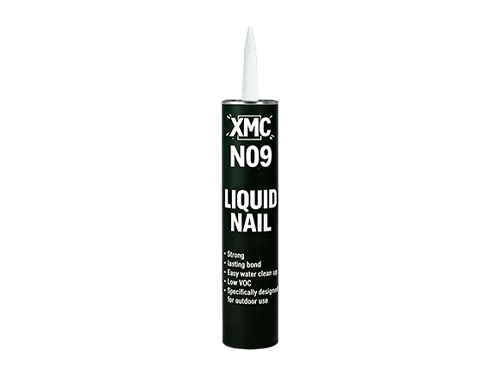
Different environments require different adhesive technologies. Weather-resistant adhesive formulations are developed for outdoor applications where materials may face humidity, temperature variation, and environmental exposure. Clear formulations are often selected when appearance is important because they minimize visual impact after installation.
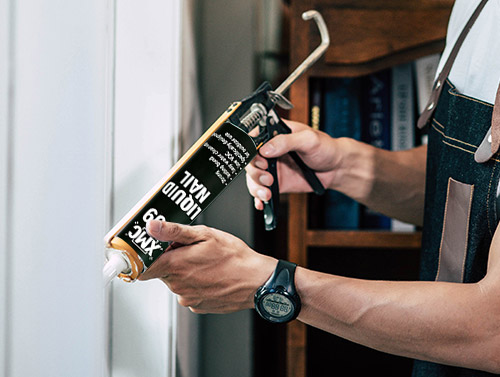
A professional liquid nail sealant product range may include multiple versions to address different construction requirements. Outdoor projects such as exterior panels, landscape structures, and repair work often require stronger environmental resistance. Indoor applications such as decorative panels and furniture installation may prioritize clean appearance and ease of use.
The selection between adhesive products and caulk should always consider the function of the material rather than only the application method. While caulk remains essential for sealing gaps, adhesive products provide stronger attachment. Hybrid products offer a combination of both properties for more demanding projects.
- Indoor adhesive products focus on clean installation and material compatibility.
- Outdoor adhesive products emphasize durability and environmental resistance.
- Clear adhesive formulations support applications requiring minimal visual impact.
How to Choose Between Liquid Nails and Regular Caulk
Choosing the correct product depends on whether the main requirement is bonding, sealing, or both. If the project involves attaching materials together, construction adhesive is generally more suitable. If the purpose is preventing water leakage or filling movement joints, regular caulk may provide better results.
For projects requiring both functions, a combined adhesive sealant can simplify installation by reducing the number of materials needed. Professional users should evaluate substrate type, environmental exposure, and expected service conditions before selecting a product.
Frequently Asked Questions
Q1: What is the difference between Liquid Nails and regular caulk?
Liquid nails products are mainly designed for bonding materials together, while regular caulk is mainly used for sealing gaps and preventing moisture penetration. Some adhesive sealants combine both functions.
Q2: Can liquid nails construction adhesive bond different materials?
Yes. liquid nails construction adhesive products are commonly designed to bond materials such as wood, tile, metal, and plastic, depending on the specific formulation.
Q3: When should I use Construction Adhesive Liquid Nails instead of caulk?
Construction Adhesive Liquid Nails should be selected when the main requirement is strong attachment between surfaces rather than only sealing joints.
Q4: Does Shanghai XMC New Material Technology Co., Ltd. provide customized adhesive solutions?
Yes. Shanghai XMC New Material Technology Co., Ltd. provides customized manufacturing support for distributors and brands, helping customers develop adhesive and sealant products for different application requirements.
Q5: What applications are suitable for liquid nail sealant?
A liquid nail sealant is suitable for construction, decoration, repair, and industrial applications where both bonding strength and sealing performance are required.

 English
 Français
 Tiếng Việt