Polyurethane (PU) Sealants vs. Silicone Sealants
Polyurethane (PU) sealants and silicone sealants (often referred to as "glass glue") are two of the most widely used sealing materials. The key differences between them lie in their core composition, performance characteristics, and application scenarios. The specific differences are as follows:
1. Differences in Core Composition and Curing Mechanism
- Silicone Sealant: The main component is a siloxane polymer (polydimethylsiloxane). It is typically a single-component product that cures from the surface inward by absorbing moisture from the air; a "skin" forms during curing, making it difficult for thick layers to cure completely throughout.
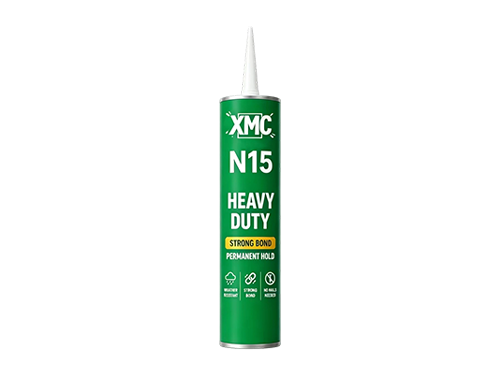
- Polyurethane Sealant: The main component is a polyurethane prepolymer (isocyanate + polyol). It is usually available as either a two-component system (requiring the mixing of components A and B) or a single-component system. It cures uniformly throughout via a chemical reaction, allowing for complete curing in thick layers or deep joints without surface skinning.
2. Differences in Core Performance, Advantages, and Disadvantages
Silicone Sealant
Advantages: Excellent weather resistance, good flexibility, waterproof and mold-resistant.
- Weather Resistance: Excellent; resistant to high temperatures (-50°C to 150°C) and low temperatures, as well as UV radiation. It does not easily age or crack during long-term outdoor use and has a long service life (up to 20+ years).
- Flexibility: Excellent; high elongation (over 500%) and good elastic recovery after deformation, allowing it to accommodate slight movements in the substrate.
- Waterproof and Mold-Resistant: Good waterproofing performance; neutral silicone sealants offer outstanding mold resistance, making them suitable for humid environments.
Disadvantages: Relatively weak adhesion (tensile strength of approx. 1–1.5 MPa); poor adhesion to polar materials like concrete and stone, making it prone to debonding; cannot be sanded or painted, as coatings do not adhere well to the surface.
Polyurethane Sealant
Advantages: Extremely strong adhesion, good elasticity, wear resistance.
- Adhesion: Extremely strong (tensile strength can reach 2–3 MPa); capable of firmly bonding "difficult-to-bond" materials such as stone, metal, concrete, wood, and plastic, making it suitable for structural bonding.
- Flexibility: Excellent; features high elongation (over 300%–500%) and high elastic recovery, capable of accommodating structural movement (such as foundation settlement or thermal expansion and contraction).
- Wear and Medium Resistance: Good resistance to abrasion, oil, and low temperatures; suitable for complex environments.
Disadvantages: Relatively weaker weather resistance; prone to yellowing and chalking under prolonged outdoor sun exposure. Sensitive to humidity (curing slows in high-humidity environments). Some products have a slight odor and require ventilation. Prone to mold growth during prolonged water immersion or in high-humidity environments.
| Feature / Parameter |
Silicone Sealant |
Polyurethane (PU) Sealant |
| Main Component |
Siloxane polymer |
Polyurethane prepolymer (Isocyanate + Polyol) |
| Tensile Strength |
~1–1.5 MPa |
2–3 MPa |
| Elongation Rate |
>500% |
300%–500%+ |
| Curing Characteristics |
Surface-to-core (skinning effect) |
Uniform chemical reaction curing throughout |
| Weather & UV Resistance |
Outstanding (20+ years) |
Moderate (prone to yellowing/chalking outdoors) |
| Paintability & Sanding |
Non-paintable |
Paintable and sandable |
3. Different Application Scenarios
- Silicone Sealant (Focus: Outdoor weather-resistant sealing, light-duty sealing): Suitable for sealing outdoor doors and windows, glass curtain walls, glass joints in sunrooms, balcony tile gaps, and bathroom applications (using neutral, anti-mold types). Ideal for scenarios requiring high weather and water resistance but lower structural bonding strength.
- Polyurethane Sealant (Focus: Structural bonding, high-movement sealing): Suitable for stone curtain walls on villas, sealing metal components in steel-structure factories, sealing large equipment foundations, expansion joints in underground projects (bridges, tunnels, water tanks), and automotive structural sealing. Ideal for scenarios requiring strong bonding and the ability to withstand structural movement or significant deformation.
Summary
Silicone sealant is the preferred choice for "outdoor weather resistance, waterproofing, and mold resistance," while polyurethane sealant is the preferred choice for "structural bonding and accommodating high movement." In practice, the choice should be based on the substrate type, environmental conditions (outdoor/indoor, humid/dry), and specific sealing requirements.
 English
 Français
 Tiếng Việt