English
 Français
 Tiếng Việt


Not all silicone sealants are interchangeable.
In facade and curtain wall construction, structural silicone and weatherproofing silicone are often discussed together because both are made from silicone. Yet they serve fundamentally different roles. A structural silicone sealant transfers mechanical loads and keeps glass panels attached to the frame. A weatherproofing silicone sealant seals joints against wind, rain, and air while allowing the building envelope to expand, contract, and deflect. Confusing the two is one of the most dangerous mistakes in cladding design. This guide explains what each material can handle and how to choose the right one for your project.
Structural silicone sealant is a high-strength adhesive product with a relatively high modulus. It is used in structural sealant glazing (SSG) systems where the sealant becomes the main medium connecting glass, metal, or stone panels to the supporting frame. In these systems, the silicone bond must resist wind suction, wind pressure, and the dead load of the glazing unit itself.
Structural silicone is designed to carry load, not just seal a gap. Its tensile and shear strength are key indicators. A reliable structural silicone maintains high strength for decades while being exposed to UV radiation, temperature cycles, and humidity. The material must have low creep so that bonded glass does not slowly slide out of position over time.
Structural silicones are available in one-component formulations for site glazing and repair, and two-component formulations for factory fabrication where faster curing improves production efficiency. Regardless of the type, the design is based on a structural calculation, and the sealant must be validated against structural glazing standards.
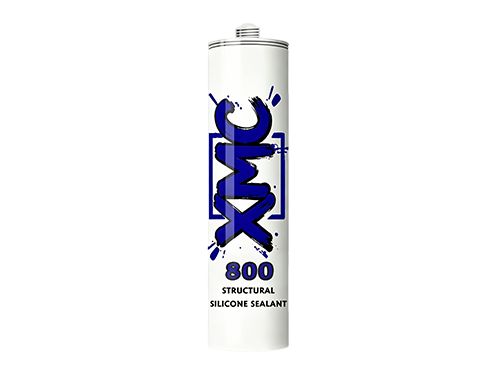 XMC800 Weather Resistant Silicone Structural SealantThis single-component neutral-cure sealant provides structural bonding for curtain walls and insulating glass, with high elasticity and UV resistance for demanding applications.View Product →
Weatherproofing silicone sealant is a low-modulus, highly elastic sealant designed to close joints between building components and keep out water and air. Unlike structural silicone, it is not intended to be a primary load path. Instead, it works by absorbing movement.
Facade materials expand and contract with temperature changes. Wind loads make panels deflect, and building floors settle. If a sealant is too stiff, these movements create stress that can break adhesion or split the sealant. Weatherproofing silicones are formulated with a low elastic modulus and high elongation, so they can compress and stretch with the joint. Products with 25% to 50% movement capability are common in facade work.
A weatherproofing sealant does not need to carry a glass panel, but it does need to stay bonded under repeated cyclic movement and resist UV and water exposure for a long service life. Many weatherproofing silicones also offer neutral cure, which makes them suitable for use on metal substrates without causing corrosion.
The table below summarizes how structural silicone and weatherproofing silicone differ in design intent and performance.
| Property | Structural Silicone | Weatherproofing Silicone |
|---|---|---|
| Primary function | Structural bonding and load transfer | Sealing and weather protection |
| Load-bearing role | Yes, designed as a load path | No, not designed for load transfer |
| Modulus | High / stiff | Low / flexible |
| Tensile strength | High | Moderate |
| Movement capacity | Limited | High (25%-50%) |
| Typical failure mode | Cohesive or adhesive structural failure | Sealant tearing or loss of adhesion |
| Design driver | Engineering structural calculations | Joint width and expected movement |
| Cure system | Neutral, often one- or two-part | Neutral or acetoxy, mostly one-part |
Four distinctions are especially important when you specify a sealant:
A simple working rule: if a sealant has to hold something up or keep a panel fixed under wind and gravity loads, select a structural silicone. If it only has to seal a gap while the materials move, select a weatherproofing sealant.
Use this selection process to avoid expensive mistakes.
If your project includes both structural glazing and weather-resistant sealing, choose a supplier who can support both product categories and provide consistent technical guidance. A manufacturer with OEM/ODM capabilities can also help distribute, pack, or private-label the correct formulations for your market.
Understanding where each silicone is applied is just as important as understanding the chemistry.
In SSG, structural silicone attaches glass or metal panels to the frame. After the structural bead cures, a weatherproofing silicone is applied along the outside of the joint to protect the structural bond from moisture and UV. This is why both materials often appear in the same facade detail but are not interchangeable.
Between individual unitized curtain wall panels, weatherproofing silicone creates a continuous barrier against air and water. It must accommodate panel movements caused by wind and temperature. In demanding climates, a high-performance weatherproofing sealant with excellent UV and moisture resistance is recommended.
Around window frames, weatherproofing silicone seals the gap between the frame and the rough opening. The sealant must allow some movement without losing adhesion. For this application, a neutral-cure door and window silicone is often preferred because it can be used in direct contact with metal frames and common building materials.
Insulating glass units use structural silicone inside the edge seal to bond glass panes and transfer loads. Large panel glass may require special acetic or neutral cure silicones depending on the manufacturing process and the materials in contact.
You can find more information about building-specific sealant selection in the construction industry solution section.
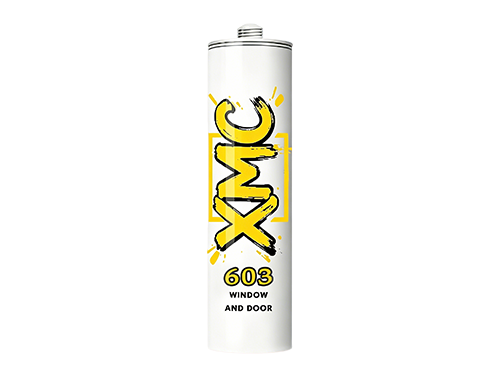 XMC603 Neutral Silicone Sealant for Doors and WindowsA low-modulus, neutral-cure sealant ideal for perimeter sealing of windows and doors, offering good unprimed adhesion and compliance with relevant standards.View Product →
No. Weatherproofing silicone is not designed to carry loads. It has lower tensile strength and a lower modulus, which means it can move with the joint but will not hold structural components in place under wind and gravity loads.
High-modulus silicone is stiff and strong, which makes it suitable for structural bonding. Low-modulus silicone is flexible and elastic, which allows it to absorb joint movement and therefore work as a weatherproofing sealant.
Some structural silicones have good weather resistance, but their primary job is load transfer. In structural glazing, the structural bead is usually protected by a weatherproofing sealant on the exterior face to reduce moisture exposure and ensure long-term performance.
Use one-part structural silicone for site glazing or repair, where simple application and room-temperature curing are preferred. Use two-part structural silicone in factory production, where faster curing and consistent quality help meet manufacturing schedules.
Structural silicone and weatherproofing silicone solve different problems. Structural silicone carries load; weatherproofing silicone absorbs movement. Choosing the wrong material can compromise the safety of a facade or shorten the service life of a joint. Evaluate the load path, expected movement, and substrate compatibility before making a decision. When in doubt, consult the sealant manufacturer's technical data sheet and ask for project-specific guidance from your sealant partner.