English
 Français
 Tiếng Việt


If you have ever sealed a metal window frame or mounted a mirror with ordinary bathroom silicone, you may have noticed dark stains, etched surfaces, or black edges creeping in behind the glass. The culprit is often the sealant itself. Acetic silicone sealant, sometimes labelled “acid-cure” or “acetoxy,” releases acetic acid as it cures. That acid can corrode metals and attack the fragile backing of mirrors. This article explains exactly why this happens and what to use instead.
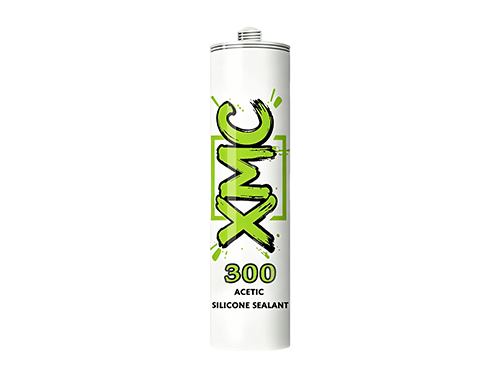
Acetic silicone sealant is a one-component, room-temperature-vulcanising (RTV) silicone. It is called “acetic” or “acetoxy” because the cross-linking reaction releases acetic acid as a by-product. You can usually identify it by its sharp vinegar-like smell during curing.
This family of sealants is widely used on glass, ceramics, and other non-porous surfaces because it bonds quickly, cures at room temperature, and forms a flexible, weather-resistant joint. Many general-purpose sealants sold in hardware stores are acetic-cure. They are also used in aquarium construction, glazing, and plumbing.
However, the same chemistry that makes acetic silicone an aggressive bonding agent also makes it chemically harsh. The acetic acid is not fully consumed during curing; some of it remains trapped in the joint or migrates to nearby surfaces.
When acetic acid comes into contact with bare metal, it creates a local acidic environment. This environment breaks down the protective oxide layer that normally shields the metal, leaving the raw surface exposed to moisture and oxygen. The result is oxidation and, in many cases, visible corrosion.
Some metals are more vulnerable than others:
Corrosion is more likely when the sealant is applied in a confined space, because the acid vapour is trapped and cannot dissipate. In metal frame assemblies, this means the damage can continue long after the sealant feels dry to the touch.
A typical mirror is not just a sheet of glass. The reflective layer is a thin coating of silver or aluminium, followed by a protective copper layer and a coat of paint. This backing is fragile and highly sensitive to acid.
Acetic silicone applied around a mirror releases acid that penetrates the edge of the backing. The acid reacts with the silver, causing desilvering, tarnishing, and the familiar “black edge” effect. Once the reflective layer is damaged, the corrosion spreads under the glass and cannot be reversed. Bathrooms are especially problematic because moisture and heat accelerate the attack.
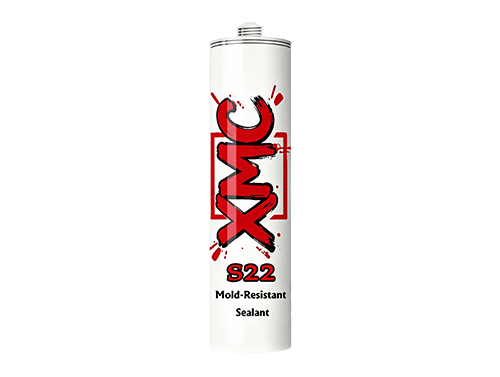
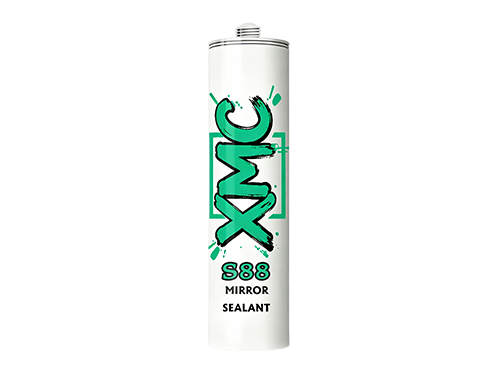
For this reason, mirror manufacturers and experienced installers recommend avoiding acid-cure silicone around mirrors. A mirror-safe sealant must be neutral-cure or otherwise free of corrosive by-products. XMC’s mirror silicone sealant is formulated for this exact application.
 Mirror Silicone Sealant XMCS88 for Safe Mirror BondingThis neutral-curing sealant is designed to bond mirrors without releasing corrosive by-products, addressing concerns about acid-cure silicone. It also suits sealing sanitary ware and glass joints, making it a versatile choice for bathroom and installation projects.View Product →
If you suspect an existing silicone joint is causing damage, look for these warning signs:
Damage can appear within weeks or develop slowly over months. The faster the corrosion appears, the more aggressive the acid attack is likely to be.
The safest direct replacement for acetic silicone is a neutral-cure silicone. Neutral silicones use an oxime or alkoxy cure chemistry that does not release acetic acid. They are widely used for metal roof seams, window frames, gutters, and mirrors. They offer the same flexibility and weather resistance without the corrosive side effects.
Neutral-cure products are the most straightforward swap because they behave and apply just like traditional silicone. They bond well to glass, coated metal, and painted surfaces, making them a reliable choice in mixed-material assemblies where acetic silicone would be risky.
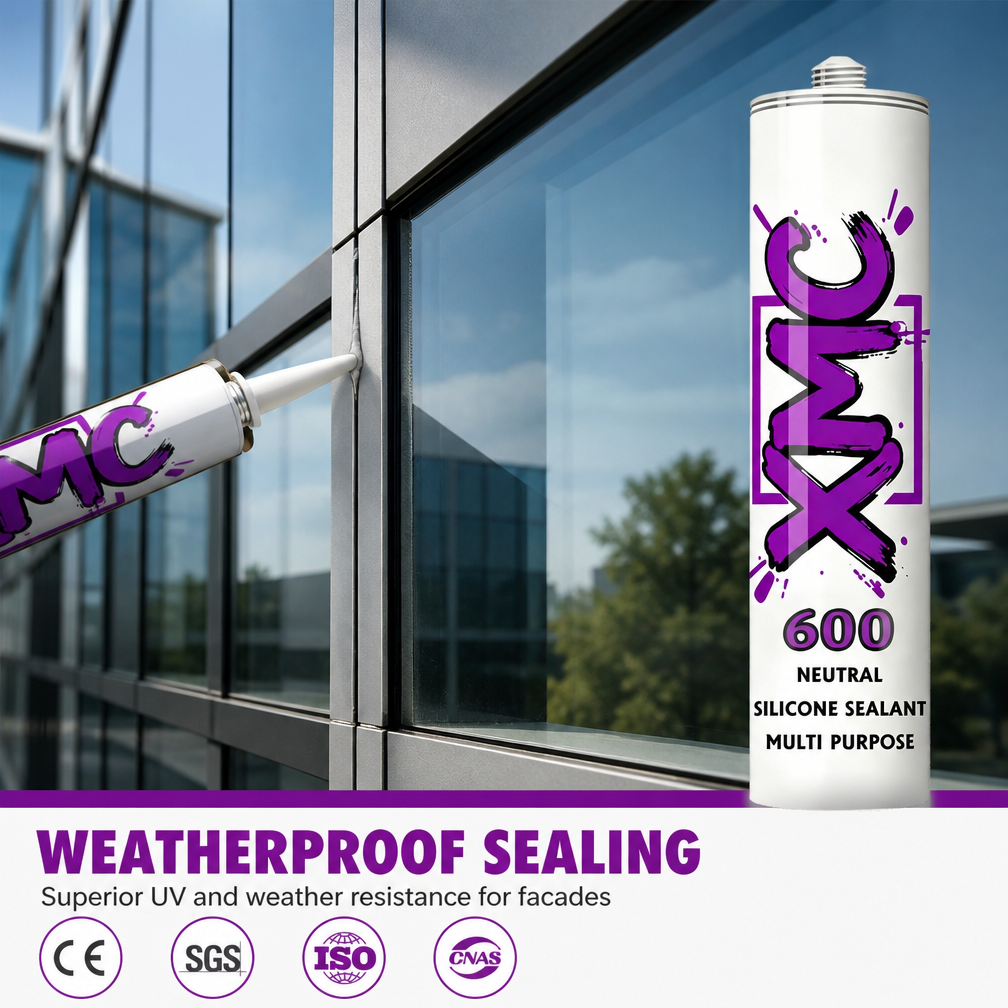 Multi-Purpose Neutral Silicone Sealant XMC600 for Mixed MaterialsPresented as a reliable neutral-cure option, this sealant bonds well to glass, coated metal, and painted surfaces. It withstands temperature extremes and weathering, offering a straightforward swap for applications where acetic silicone would be risky.View Product →
Another excellent alternative is an MS polymer or hybrid sealant. MS polymers cure by moisture without releasing acid or other aggressive compounds. They bond well to both metal and glass, remain flexible for decades, and are paintable. This makes them popular for mixed-material assemblies and renovation work where a single sealant must perform safely on many surfaces.
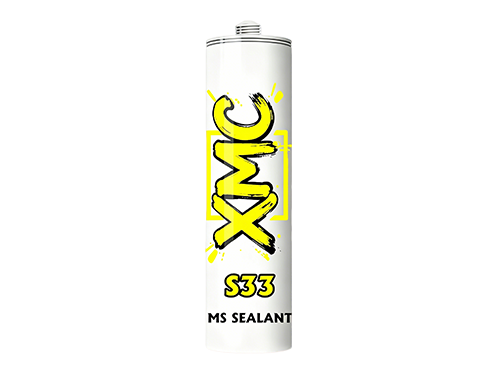 Eco-Friendly MS Polymer Sealant XMCS33 for Mixed MaterialsThis moisture-curing MS polymer is non-corrosive, bonds well to metal and glass, and remains flexible. Suitable for renovation and mixed-material assemblies, including mirror mounting and interior finishing, without releasing aggressive compounds.View Product →
If you need a strong adhesive rather than a gap-filling sealant, choose a low-corrosion liquid nail or construction adhesive labelled non-acidic. But for joints that must stay waterproof and flexible, neutral-cure silicone or MS polymer are the better choices.
Use the table below as a quick guide when selecting a sealant for metal or mirror assemblies.
| Property | Acetic Silicone | Neutral Silicone | MS Polymer |
|---|---|---|---|
| Curing by-product | Acetic acid | Alcohol or oxime | Alcohol |
| Safe on copper and brass | No | Yes | Yes |
| Safe on aluminium | Risky | Yes | Yes |
| Mirror backing safe | No | Yes | Yes |
| Paintable | No | Usually no | Yes |
| Best use | Glass-to-glass, ceramics, aquariums | Windows, metal frames, mirrors | Mixed materials, facade joints, repairs |
Remember that “neutral” on the label is not enough; check whether the product says “neutral cure” or “acid-free” and confirm that it is specifically recommended for metals or mirrors.
Technically you can, but you should not. The acetic acid can etch the aluminium surface and promote corrosion, especially in wet or outdoor conditions. Use a neutral-cure silicone for aluminium frames.
Yes. Neutral-cure silicones bond very well to glass and most other non-porous materials. In mirror applications they are actually superior because they do not attack the backing.
Check the technical data sheet or label for the words “acetic,” “acetoxy,” or “acid-cure.” These all indicate an acid-releasing formula. A strong vinegar smell while curing is another clear sign. “Neutral cure,” “alkoxy,” or “oxime” indicates a non-acid formula.
Remove the sealant as soon as possible. Use a suitable silicone remover and carefully scrape away the cured product. Clean the area thoroughly, then reseal with a neutral-cure or MS polymer product. If the mirror already shows black edges, the damage is permanent and the mirror may need replacement.
Understanding why acetic silicone corrodes metals and mirror backings is the first step toward avoiding expensive damage. The acid released during curing does not stay neatly inside the sealant; it migrates into adjacent materials and continues to react long after installation. For any project involving metal, mirrors, or mixed materials, choose a neutral-cure silicone or an MS polymer sealant instead.
As a dedicated sealant manufacturer with nearly two decades of experience, XMC Sealant offers a full range of neutral-cure silicone and hybrid products for construction and industrial use. Whether you are a contractor or a distributor, our engineering team can help you select the right formulation for your substrate. Contact us to discuss your project requirements, or visit our company profile to learn more about our manufacturing capabilities.