English
 Français
 Tiếng Việt


In large plate glass installation, the sealant is not a secondary detail. It is the material that bonds the glass into the frame, seals the joint against air and water, and decides how the finished transparent surface looks under natural light. A cloudy joint, a crack that appears after a few months, or a bond that releases during a temperature swing can all be traced back to the wrong sealant choice. This article explains why acid silicone, in particular Grade 346, is preferred for high-clarity joints in large plate glass work, and where its limits are.
Large plate glass installation covers storefront windows, glass partitions, balustrades, and interior showcases. All of these demand a sealant that cures to a clear, bubble-free rubber, bonds firmly to bare glass, and remains stable under sunlight. Acetic-cure silicone Grade 346 belongs to the acid silicone family and is formulated to meet these demands directly.
Acid silicone, also called acetoxy or acetic-cure silicone, is a one-component sealant that cures when the acetic acid released from the paste reacts with moisture in the air. The sharp vinegar-like smell during curing is the clearest sign that the product is an acetoxy system. Grade 346 is a large-panel glass acetic silicone sealant designed for glass-to-glass and glass-to-frame joints where transparency is a core requirement.
Unlike general-purpose sealants that carry heavy fillers, Grade 346 is built around a high-purity silicone polymer and a cure system that minimizes haze. The cured rubber stays optically clear instead of yellowing or turning milky. Its low viscosity profile also lets the sealant wet the glass surface fully and create a continuous, void-free bond.
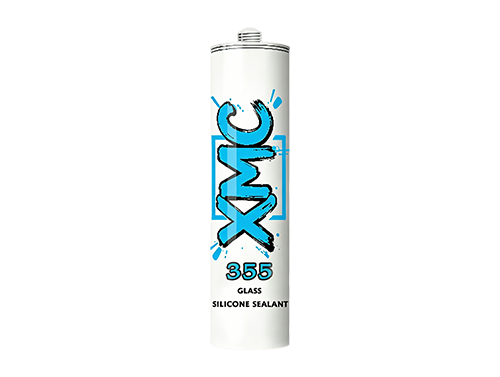
 Large Panel Glass Acetic Silicone Sealant XMC355Product Features: 1. Single-component room temperature acetic silicone Sealant.This single-component room-temperature acetic silicone sealant iS specifically designed ...View Product →
High-clarity joints are not purely cosmetic. In glass balustrades, bay windows, and showcase glazing, the sealant line is visible from both sides, and any cloudiness or trapped air reads as a defect. Grade 346 is preferred in this role for four reasons:
For a practical look at how silicone sealants perform in real building envelopes, including window wall and facade joints, refer to the construction industry solutions overview.
Both acid silicone and neutral-cure silicone bond well to glass, but they are not interchangeable. The comparison table below summarizes the differences that matter when you select a sealant for a large plate glass installation.
| Property | Acid Silicone (Grade 346) | Neutral Cure Silicone |
|---|---|---|
| Curing agent | Acetic acid (vinegar odor) | Alcohol or oxime (low odor) |
| Clarity after cure | Excellent, high transparency | Good, varies by formulation |
| Adhesion to bare glass | Excellent | Excellent |
| Corrosion risk on metals | High, avoid aluminum and steel | Low, metal safe |
| Skin time | Fast, 10-15 minutes | Slower, 20-40 minutes typical |
| Relative cost | Lower | Higher |
| Best suited for | Large plate glass, partitions, showcase glazing | Metal frames, coated glass, structural glazing |
In short, when the joint is purely a weather seal and the substrate is bare glass, acid silicone gives the best visual result at the lowest cost. When metal frames or structural loads enter the picture, neutral cure takes over.
Correct installation technique is as important as the formulation itself. Follow these steps to achieve a clean, durable, high-clarity joint on large glass panels.
On very large panels, weight and wind load can make the joint behave differently than in laboratory samples. When the glass is only supported by the sealant, this installation method is not enough. A structural glazing system must be engineered separately.
Acid silicone is not a universal solution. The acetic acid released during curing attacks reactive metals, so it must not come into contact with aluminum frames, galvanized steel, or anodized surfaces. It is also unsuitable for concrete, marble, and mirrors whose backing can be stained by acid migration.
For those substrates, choose a neutral-cure silicone. Neutral systems release alcohol instead of acetic acid and accept a much wider range of building materials. When the project involves structural glazing, where the sealant carries the weight of the glass, a neutral structural silicone with defined mechanical strength should be specified. For ordinary large plate glass installation where the joint acts as a weather seal and the frame is not metal, Grade 346 remains the preferred, cost-effective option.
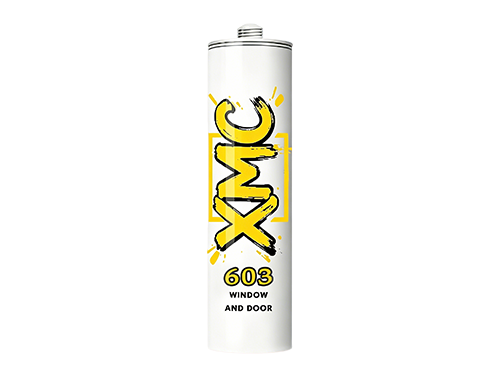 Neutral Silicone Sealant for Doors & Windows XMC603One-part, low modulus, neutral curing silicone sealant specifically developed for the sealing of common construction substrates (like glass, aluminum profile, etc). 1....View Product →
No. Acetic acid released during curing corrodes aluminum and other reactive metals. Use a neutral-cure silicone for metal-framed glazing.
Skin forms in 10-15 minutes at 23°C and 50% relative humidity. A 3 mm joint reaches full cure in about 24 hours. Cold or dry conditions extend the time.
Cloudiness is usually caused by applying in high humidity, tooling too late when the skin has already formed, or using an expired product. Check the production date and keep the joint clean while it cures.
Yes. The glass itself is unaffected by acetic acid. Just keep the sealant away from metal fittings, mirror coatings, and edge seals that contain metal.
Selecting the right sealant for a large plate glass installation comes down to understanding what the joint has to do. When the joint must stay visibly clear, bond firmly to bare glass, and resist weathering without straining the budget, acid silicone Grade 346 is the proven, preferred choice. For metal frames and structural bonds, step up to a neutral-cure system. Glazing companies that need a dependable supply of Grade 346, consistent batch quality, or custom packaging can work with a sealant manufacturer that offers OEM and ODM services to match the product to the project specification exactly.