Product Overview
Acrylic sealant is one of the most widely used sealing materials in the construction industry, valued for its well-balanced performance profile. It offers excellent weatherability, maintaining stable properties across diverse climatic conditions while resisting degradation from UV radiation, rain, and temperature fluctuations.
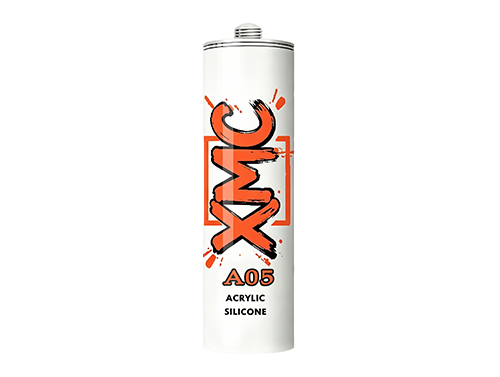
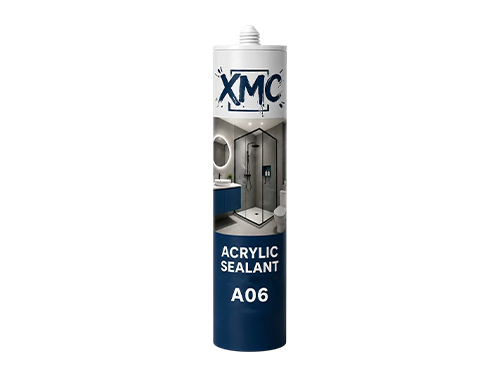
XMCA05 is a premium one-component, neutral-curing acrylic sealant formulated with advanced water-based polymer emulsion technology. Unlike conventional solvent-borne products, it contains no solvents, no pungent odors, and no hazardous volatiles – making it a building accessory that delivers both high performance and environmental responsibility. Its unique formulation ensures that after curing, it retains superior elasticity while providing a tenacious bond strength comparable to that of concrete.
Core Competitive Advantages
In architectural finishing, three persistent challenges plague conventional sealants: yellowing, adhesion failure, and substrate staining. XMCA05 has been engineered to address each of these pain points with precision:
Ultimate Environmental Friendliness & Weatherability
- Zero solvents, minimal VOC: The product is virtually odorless and non-toxic, ensuring a safe working environment and hassle-free application.
- Superior non-yellowing & UV resistance: Independently validated to retain its original color and mechanical integrity even after prolonged outdoor exposure – no cracking, no chalking, no discoloration.
Wide Application Window & Flexibility
- Broad temperature tolerance: Maintains stable viscosity and easy extrusion between 4℃ and 40℃, with fast cure speed to accelerate project turnaround.
- Flexible yet durable: After curing, the sealant exhibits excellent flexibility to accommodate minor substrate movement caused by thermal expansion and contraction, ensuring a long-lasting, watertight seal.
Perfect Surface Compatibility
- Paintable: Once surface-dry, it is compatible with most industrial paints and coatings without affecting cure speed – enabling seamless color integration.
- Non-staining: Provides strong adhesion to porous substrates such as tile and wood, without oil bleeding or migration, keeping finished edges clean and aesthetically pleasing.
Primary Applications
XMCA05 is specifically designed for interior and exterior decorative finishing, edge sealing, and waterproofing – a versatile ally for architectural fit-outs:
- Interior finishings: Edge sealing and bonding for baseboards, door frames, wardrobes, and wall joints – a reliable alternative to silicone that eliminates blackening and mold growth.
- Door & window systems: Filling gaps between frames and walls to effectively block water ingress, dust infiltration, and air leakage, thereby enhancing thermal insulation, acoustical performance, and energy efficiency.
- Curtain walls: Sealing non-structural panel joints to ensure weather tightness and structural integrity of facade systems.
Important Note: This product is engineered for porous substrates (wood, concrete, tile, gypsum board). It is not intended for use as a structural adhesive, nor for deep joint sealing on metal, glass, or other non-porous smooth surfaces.
Selection Guide
Choosing the right sealant involves more than comparing unit prices. To avoid costly rework due to sealant failure, we recommend evaluating your project requirements across three critical dimensions:
| Dimension |
Evaluation Focus & Recommendation |
| Substrate Type |
Acrylic sealants naturally excel on porous materials such as wood, concrete, masonry, and tile. If your project primarily involves these substrates, an acrylic system offers the best cost-performance ratio. For metal or glass curtain walls, however, be sure to confirm whether the formulation is corrosion-inhibitive. |
| Mechanical Properties |
Pay close attention to elongation at break (a key elasticity indicator that determines the sealant's ability to accommodate joint movement caused by thermal expansion and contraction) and hardness (Shore A). Excessive hardness can lead to cracking, while insufficient hardness tends to attract dirt and dust. For architectural edge sealing applications, a medium-hardness, high-elongation grade is generally recommended. |
| Environmental Compliance |
Overseas projects increasingly impose strict VOC and odor limits. Water-based formulations, with their inherently low VOC content, offer a clear regulatory advantage – both for international shipping logistics and for indoor confined-space applications. |
Application & Safety Guidelines
To achieve optimal sealing performance, please follow this standardized procedure:
Surface Preparation (Critical Step)
- Substrates must be clean, dry, and free of grease, dust, or old sealant residues.
- Apply masking tape along both sides of the joint to protect adjacent surfaces from overspill.
Application Procedure
- Cut the nozzle tip at a 45° angle, load the cartridge into a standard caulking gun, and extrude the sealant continuously and uniformly into the joint.
- Before skin-over, tool the surface using a spatula, or smooth it with a finger dipped in clean water (water-based sealants allow water-assisted tooling).
- Remove the masking tape immediately after tooling, while the sealant is still wet, to achieve crisp, clean edges.
Environmental Limits
- Recommended application temperature range: 5℃ – 45℃.
- Do not apply in damp, frosty, or rainy conditions, or when the substrate is wet.
Storage
- Unopened cartridges should be stored in a dry, cool, well-ventilated area at 5℃ – 27℃.
- Shelf life: 12 months from date of manufacture (when stored under recommended conditions).
Usage Restrictions
Please observe the following limitations to ensure safe and effective use:
- Not to be used as a structural adhesive.
- Not suitable for expansion joint sealing (deep movement joints).
- Not for use in confined, unventilated spaces, or on surfaces that come into direct contact with food or potable water.
- Do not apply when substrate surface temperature is below 4℃ or above 40℃.
 English
 Français
 Tiếng Việt