English
 Français
 Tiếng Việt


Content
Collision repair shops and body panel manufacturers are steadily replacing spot welds with bonded joints across large sections of the vehicle body. This shift is not a passing trend. It reflects real changes in how vehicles are built, with mixed materials, thinner gauges, and coated surfaces that do not always tolerate heat well. An automotive sheet metal adhesive distributes stress evenly across a joint instead of concentrating it at a single weld nugget, which changes how a repaired panel behaves under repeated flexing and vibration.
Modern unibody structures often combine steel, aluminum, and composite materials in the same assembly. Welding dissimilar metals directly is difficult and can trigger galvanic corrosion at the joint. Bonding solves this problem by placing a chemically inert layer between the two surfaces, isolating them electrically while still transferring load.
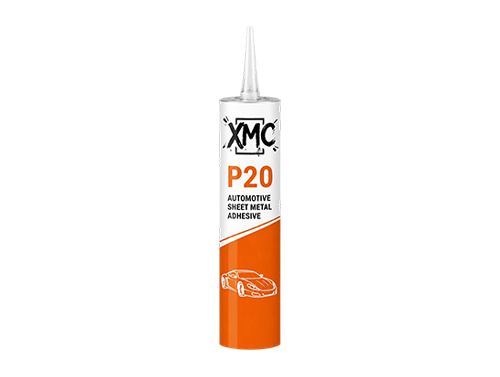
A structural automotive adhesive is applied as a bead or film between two metal surfaces, then the panel is clamped or fixtured while the material cures. As it cures, the adhesive forms a continuous molecular bridge across the joint. Unlike a mechanical fastener or weld, this bridge does not rely on a single point of contact.
Three properties determine how well a bonded joint performs over the life of a vehicle:
Panels bonded with a flexible, high-elongation adhesive tend to absorb minor impacts and road vibration without cracking the bond line. This is one reason bonded seams are now common on rocker panels, roof rails, and floor pan sections, where repeated low-level flexing is unavoidable.
No adhesive performs to its rated specification on a poorly prepared surface. Oil, mill scale, and loose coating residue prevent the adhesive from wetting out properly, which leaves microscopic voids in the bond line. These voids become stress risers and are the leading cause of premature bond failure in field repairs, not the adhesive chemistry itself.
Neither method is universally superior. The right choice depends on the panel location, the base metals involved, and whether the joint is structural or cosmetic. The table below summarizes the practical differences technicians encounter in the shop.
| Factor | Spot Welding | Panel Bond Adhesive |
|---|---|---|
| Heat exposure to base metal | High, localized | None to minimal |
| Corrosion protection coating damage | Common at weld point | Coating stays intact |
| Stress distribution | Concentrated at nugget | Spread across bond area |
| Dissimilar metal joining | Difficult, galvanic risk | Well suited |
| Vibration fatigue resistance | Moderate | High with flexible adhesives |
| Equipment cost | Higher, specialized welder | Lower, applicator gun |
| Skill sensitivity | High, operator dependent | Moderate, process dependent |
In practice, many structural repairs use a combination approach: adhesive for load distribution and corrosion isolation, paired with mechanical fasteners such as rivets for immediate handling strength before the adhesive reaches full cure.
Bond strength figures are often quoted in isolation without context, which makes them hard to interpret. What matters more for repair work is how strength develops over time and how the joint performs under the specific loading a panel will see in service.
Typical two-part structural adhesives used for sheet metal bonding reach shear strengths in the range of 20 to 35 megapascals on properly prepared steel, roughly comparable to or exceeding the shear capacity of a single spot weld across an equivalent overlap area.
Flexible epoxy and polyurethane hybrid formulations resist peel forces far better than rigid adhesives, which is critical on panels subject to door slam impact or road debris strikes.
Independent laboratory fatigue testing on bonded steel lap joints has shown service life extending well beyond ten million load cycles at moderate stress amplitudes, a figure that typically exceeds welded joint fatigue performance under the same conditions.
These figures vary by formulation and substrate, so shop-level testing on scrap panels before a repair is a reasonable quality practice, particularly for insurance-documented structural work.
Cure time is often the deciding factor when a shop chooses between adhesive families. A faster cure reduces vehicle downtime, but it can also reduce open working time, which affects how carefully a technician can align a panel before the material sets.
| Adhesive Type | Open Time | Handling Strength Reached | Full Cure |
|---|---|---|---|
| Fast two-part epoxy | 3 to 5 minutes | 20 to 30 minutes | 24 hours |
| Standard two-part epoxy | 10 to 20 minutes | 60 to 90 minutes | 24 to 48 hours |
| Polyurethane hybrid | 15 to 30 minutes | 2 to 4 hours | 48 to 72 hours |
| Heat-accelerated epoxy | 5 to 10 minutes | 10 to 15 minutes with heat lamp | 4 to 8 hours |
Ambient shop temperature has a large effect on all of these figures. A joint curing at 15 degrees Celsius can take twice as long to reach handling strength compared with the same adhesive curing at 25 degrees Celsius. Shops working through cold months often use infrared heat lamps or heated bays specifically to keep cure schedules predictable.
Consistent results depend on following a repeatable sequence rather than treating adhesive application as a quick add-on step to mechanical repair. The diagram below outlines the general workflow used for structural panel bonding.
Not every panel on a vehicle is a good candidate for adhesive-only repair. Some areas remain welded or use a hybrid weld-bond approach for redundancy. The list below reflects common industry practice for structural and semi-structural repair zones.
Structural pillars, seat belt anchor points, and other safety-critical zones almost always follow the original equipment repair procedure, which frequently mandates specific weld-bond combinations rather than adhesive alone. Technicians should always confirm the manufacturer repair procedure for these zones before selecting a bonding method.
Consistent bonded repairs come down to discipline in a handful of checkpoints. Shops that document these steps tend to see far fewer comeback repairs related to bond failure.
| Checkpoint | What to Verify |
|---|---|
| Surface cleanliness | No visible oil, dust, or oxidation before bead application |
| Mix ratio | Correct proportion for two-part systems, confirmed against label |
| Bead continuity | No gaps or thin spots along the joint length |
| Ambient temperature | Within the manufacturer specified curing range |
| Clamp time | Held until minimum handling strength is confirmed |
| Final inspection | No squeeze-out gaps, joint fully sealed at edges |
Recording ambient shop temperature and cure start time on the repair order gives a documented trail if a warranty question arises later, which is increasingly expected by insurers reviewing structural adhesive repairs.
For many panel locations, a properly applied structural adhesive matches or exceeds the shear strength of an equivalent spot weld area, and it typically outperforms welding in fatigue resistance because it spreads load across the full bond line instead of a single point.
Some safety-critical zones require the original equipment repair procedure, which may call for welding, riveting, a specific adhesive, or a combination of methods. Technicians should always confirm the manufacturer procedure before choosing a bonding method for these areas.
Clamp time depends on the adhesive family and ambient temperature, ranging from around twenty minutes for fast-cure epoxies to several hours for polyurethane hybrids, with full cure often taking one to three days.
Yes, low temperatures slow both open time and cure development significantly. Many shops use heated bays or infrared lamps to keep cure schedules consistent during colder months.
Adhesive bonding is well suited to joining aluminum and steel because it electrically isolates the two metals, preventing the galvanic corrosion that can occur when dissimilar metals are welded or fastened in direct contact.