English
 Français
 Tiếng Việt
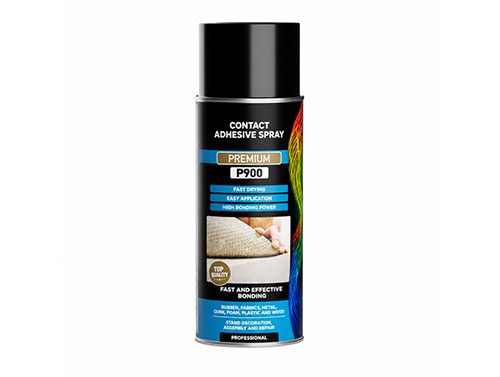


Spray adhesive is an adhesive applied in a fine spray pattern to distribute the bonding material across a surface. It is especially useful when working with large panels, lightweight materials, or surfaces where even adhesive coverage is important.
P900 Spray Adhesive is designed for convenient application and fast drying, making it a practical option for a wide range of bonding tasks.
Depending on the substrate and application conditions, spray adhesives can be used for bonding various materials, including:
Different materials have different surface properties. Before full-scale application, always test compatibility and bonding strength on a small sample, especially when working with plastics, coated surfaces, or delicate foam.
The quality of a bonded joint depends not only on the adhesive itself but also on the application process.
Make sure the surfaces are clean, dry, and free from dust, oil, and other contaminants.
Follow the product instructions for spray distance, coverage, and application method. Avoid excessive application, which may increase drying time or affect the final bond.
Some spray adhesives are designed for immediate bonding, while others require a specific waiting period before the surfaces are joined. Follow the technical data sheet rather than assuming all spray adhesives work the same way.
Align the materials carefully and apply even pressure to establish good contact across the bonding area.
Fast drying does not necessarily mean the adhesive has reached its final bonding strength. Allow sufficient time before handling or loading the bonded materials.
Several factors can influence the final result:
| Factor | Impact Description |
|---|---|
| Surface condition | Dust, oil, and moisture can interfere with adhesion. |
| Application coverage | Uneven spraying may create weak spots. |
| Material compatibility | Some plastics, coatings, and foam materials may require special consideration. |
| Temperature and humidity | Environmental conditions can affect drying and bonding. |
| Assembly timing | Joining surfaces too early or too late may reduce bonding performance, depending on the adhesive formulation. |
Understanding these factors helps improve consistency and reduce material waste.
P900 Spray Adhesive is intended for applications where convenient spraying, fast drying, and efficient coverage are important.
Its potential advantages include:
For professional users, the best adhesive is not simply the one that bonds quickly. It is the one that matches the material, production process, performance requirements, and overall cost target.